PPC Beyond Google Ads: Exploring ChatGPT Ads

The digital advertising landscape is shifting beneath our feet. Following their initial rollout, ChatGPT ads have officially arrived in the UK, opening up an entirely new PPC channel for brands looking to complement traditional Google Ads and capture high-intent audiences.

Unlike traditional search engines or social media feeds where users passively scroll or type rigid keywords, ChatGPT is where people go to deeply research, solve complex problems, and make decisions. For digital marketers and business owners, this introduces a brand-new way to connect with prospects right at the moment of consideration.
At ThoughtShift, we’ve been diving deep into the beta platform. Here is everything you need to know about how ChatGPT ads work, how they differ from what you’re used to, and how to position your brand to win.
How ChatGPT Ads Work: The Power of Context Hints
If you are used to the mechanics of Google Ads or social media advertising, ChatGPT Ads will feel both familiar and refreshingly different.
“People come to ChatGPT to solve specific problems. They’re not just browsing, they’re actively evaluating solutions.”
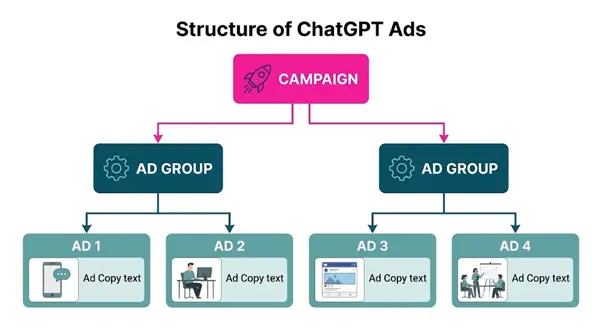
The campaign architecture follows a classic structure you already know: Campaign level > Ad group level > Ad level. Within your campaigns, you can target specific locations, set objectives (Reach, Clicks, or Conversions), and choose how you want to bid. However, when it comes to targeting, throw everything you know about keyword matching and demographic profiles out the window.
Instead of bidding on exact-match keywords or building age-and-gender audience buckets, ChatGPT Ads rely on Context Hints.
- Plain-Language Briefings: At the ad group level, advertisers provide a 1-2 sentence contextual description that defines the specific user intent, scenario, or pain point your service addresses.
- Semantic Matching: Rather than scanning for a rigid keyword string, the ad engine analyses the natural language, underlying intent, and context of the user’s active conversation.
- Ad Group Testing: Ad groups act as brilliant testing grounds for different contextual hints, allowing you to trial various conversational angles. At the ad level, you can then run A/B split tests using different image assets and ad copy.
Because the ad format itself is clean and minimal, consisting of a single headline (up to 50 characters), a brief description (up to 100 characters), a square image asset (256x256px), and a destination URL, making every character count is crucial. Crafting concise, punchy copy that fits these tight constraints while speaking directly to the user's current dialogue is the secret to high performance.
B2B vs. B2C: Who Are ChatGPT Ads Best For?
While brands across sectors are exploring the beta, ChatGPT Ads are uniquely powerful for B2B companies, high-consideration consumer services, and complex retail purchases.
The key difference lies in how people use AI. Rather than scrolling social feeds or skimming search engine result pages, users come to ChatGPT to solve specific problems. A business owner asking "What's the best email marketing software?" or "What are the best sustainable packaging suppliers in the UK?" isn't just browsing, they're actively evaluating solutions.
If your customers typically need to research, compare options, and think before they buy, this placement puts your brand front and centre during the exact research phase where decisions are shaped. Early data from beta testers highlights that while click volumes may differ from high-traffic search networks, the intent behind those clicks is deeply commercial. Early community benchmarks from sources like eMarketer and early agency testing platforms (such as Tru Commerce) indicate click-through rates (CTR) hovering around the 0.9% to 2.4% mark, depending on how tightly optimised the context hints and creative angles are.

Tracking and Technical Setup: What You Need to Watch Out For
1. Conversion Optimisation: Within the ad platform, keep in mind that only one primary conversion action can be applied to the account for automated machine-learning optimisation (though you can still track secondary events using a pixel, similar to Meta Ads).
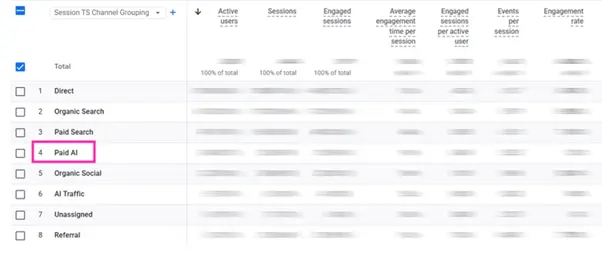
2. GA4 Custom Channels: If you rely on Google Analytics 4, do not leave your tracking to default settings. Organic AI visibility and Paid AI traffic will naturally blend together, completely skewing your performance data. We strongly recommend setting up a dedicated custom channel in GA4 for "Paid AI" so you can accurately isolate, measure, and attribute leads and conversions driven strictly by your ad spend.
Navigating the Future of AI Advertising Together
ChatGPT Ads are still very much in Beta, and as OpenAI refines the platform, we can expect a wave of changes, feature rollouts, and updates over the coming months and years as the world of AI Search continues to evolve.
Navigating a brand-new PPC advertising channel while managing existing Google and Meta budgets can feel overwhelming. That’s why the team at ThoughtShift is staying right on top of these developments. Whether you want to explore setting up your very first ChatGPT ad campaigns from scratch, or you’ve tested the waters and found your existing ads aren't quite driving the volume or leads you need, we are here to help.
Get in touch with the ThoughtShift team today to audit your AI visibility and build a future-proof paid media strategy that keeps you steps ahead of the competition.